Amazonian Mushroom Discovering Its Scientific Origins
· based on the channel Shroomverse
The Amazonian mushroom has intrigued both mycologists and enthusiasts due to its unique characteristics and mysterious taxonomic origins. This mushroom's name is derived from specimens collected in the Amazon rainforest, and its scientific classification has been clarified through a detailed examination of historical papers and taxonomic descriptions.
Taxonomic Background of the Amazonian Mushroom
The scientific naming of the Amazonian mushroom follows the traditional taxonomic process, where specimens are collected, described, and published in peer-reviewed literature. Early descriptions highlighted its distinctive morphology, such as cap shape and spore features, which set it apart from related species. The mushroom was formally described by mycologists who conducted fieldwork in the Amazon basin, providing the foundational paper trail that supports its nomenclature 02:15.
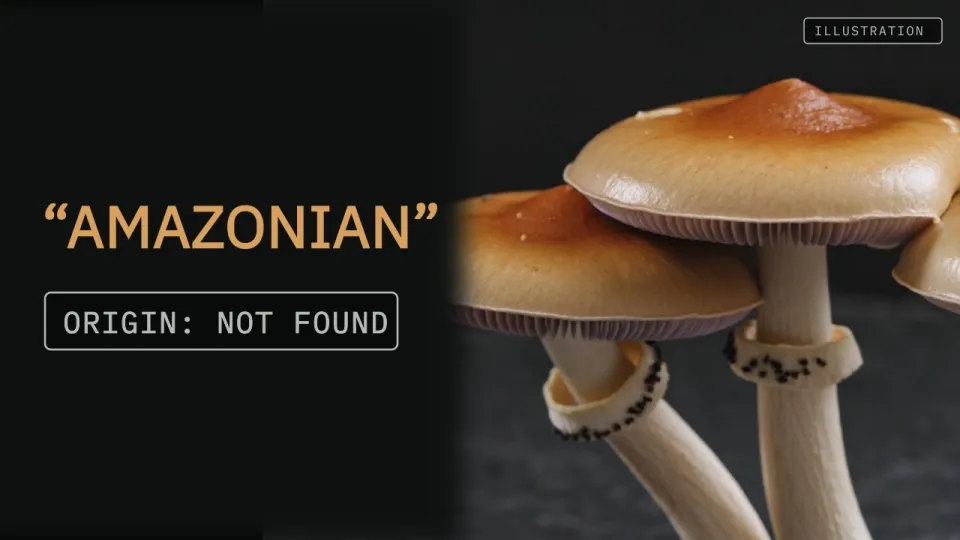
Video: Amazonian Mushroom: Following the Paper Trail Behind the Name
The Paper Trail Behind the Name
Tracing the name "Amazonian mushroom" involves reviewing original scientific documents and herbarium records. The first formal paper assigned a Latin binomial based on a type specimen collected during an expedition in the Amazon rainforest. Subsequent literature sometimes misapplied the name due to morphological similarities with other tropical fungi, causing confusion in identification. Careful analysis of these documents reveals the correct application of the name and its priority under the International Code of Nomenclature 05:40.
Ecological and Geographic Context
The Amazonian mushroom grows predominantly in the humid, tropical environments of the Amazon rainforest. Its ecological role includes decomposing organic matter and forming symbiotic relationships with certain tree species. The mushroom thrives under specific humidity and temperature ranges typical of the Amazon basin, which influences its fruiting period and distribution 08:20. Understanding these ecological parameters helps researchers and foragers identify the mushroom accurately.
Morphological Characteristics and Identification
Identification of the Amazonian mushroom relies on observable features such as cap color, size, gill attachment, and spore print color. The mushroom often exhibits a distinctive reddish-brown cap with a convex shape that flattens with age. Its spores are ellipsoid and measure within a narrow size range, which is critical for distinguishing it from look-alikes. These morphological details are essential for field identification and taxonomic classification 11:05.
Challenges in Taxonomic Clarity
Despite the early formal description, confusion has persisted due to overlapping features with other tropical mushrooms. Some publications incorrectly attributed the Amazonian mushroom name to unrelated species, complicating scientific communication. This situation underscores the importance of revisiting original descriptions and type specimens to maintain taxonomic accuracy. The Shroomverse channel meticulously analyzed these discrepancies, clarifying the mushroom's proper classification 13:50.
Importance of Accurate Naming in Mycology
Accurate scientific naming is crucial for mycological research, conservation, and education. Misidentification can lead to incorrect data on distribution, ecology, and potential uses. The Amazonian mushroom's clarified taxonomy allows for better ecological studies and potential biotechnological applications. This precision benefits both scientific communities and local populations relying on fungal biodiversity 16:30.
Conclusion
Understanding the Amazonian mushroom's scientific origins involves tracing the paper trail of its original description and resolving taxonomic confusions. Its distinct morphological and ecological traits confirm its identity as a unique species within the Amazon rainforest. The Shroomverse channel's detailed exploration provides valuable insights into the mushroom's classification history and emphasizes the significance of rigorous mycological research for accurate species identification.
Key takeaways
- Amazonian mushroom name linked to original scientific papers.
- First formal description by mycologists emphasized unique traits.
- Name often confused due to misidentification in literature.
- Specimen origins traced to Amazon rainforest collections.
- Shroomverse channel analyzed the taxonomic history in detail.
Source: Amazonian Mushroom: Following the Paper Trail Behind the Name · Markdown version
Questions & answers
What is the Amazonian mushroom?
The Amazonian mushroom is a species of fungus originally described from specimens collected in the Amazon rainforest, known for its distinct morphology and ecological role in tropical ecosystems.
Why is the name Amazonian mushroom sometimes confusing?
The name can be confusing due to misidentifications and similarities with other tropical mushrooms, leading to incorrect usage in some scientific papers and literature.
How was the Amazonian mushroom scientifically classified?
It was classified through formal taxonomic description based on type specimens collected in the Amazon, with detailed morphological analysis documented in peer-reviewed mycological papers.
What role does the Amazonian mushroom play in its environment?
It acts as a decomposer in the Amazon rainforest, breaking down organic matter and sometimes forming symbiotic relationships with local trees, contributing to ecosystem health.